

Bridging Biomedical Life Science with Environmental Life Science
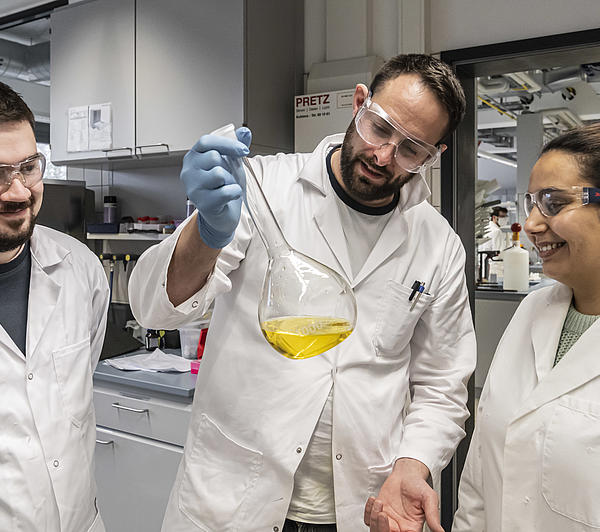
Biomedical research, biotechnological innovation, and global environmental change – the challenges in the field of life sciences are diverse. The research-oriented Master’s programme in Life Science is aimed at students interested in molecular, biomedical and environmental processes as well as their analysis using modern experimental methods. The programme combines Molecular and Biomedical Life Science with Environmental Life Science and places a strong emphasis on bioanalytical methods and interdisciplinary laboratory training. The programme prepares graduates for challenging careers in life science, biotechnology, environmental science, and related fields, and provides an excellent foundation for pursuing a doctoral degree.
Overview
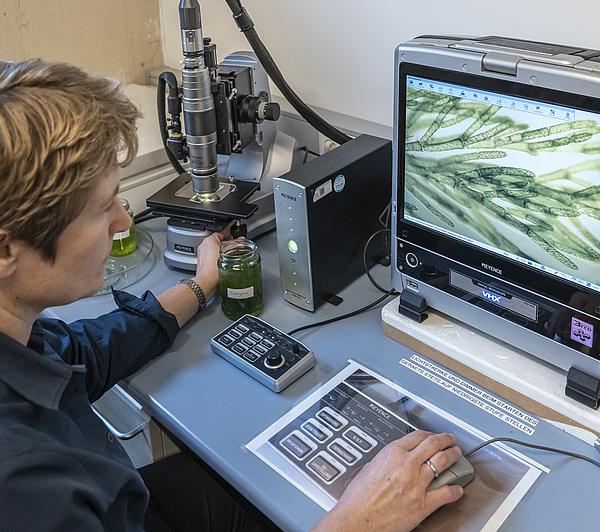
The Master’s programme "Life Science (M.Sc.)" provides advanced knowledge on the organization and pathways of life at the molecular and cellular level in both molecular-biomedical ("Molecular and Biomedical Life Science") and environmentally relevant ("Environmental Life Science") contexts. The curriculum places a particular emphasis on (bio)analytical methods and experimental training, enabling students to investigate complex biological processes and systems using modern analytical and quantitative approaches. The programme is designed for graduates of Bachelor’s programmes with a strong interest in research-oriented topics at the interface of chemistry and biology.
- Summer semester
- Winter semester
- English
- German and English
- To be enrolled in the master program „Life Science“ students have to be graduated either from the Bachelor’s programme “Angewandte Naturwissenschaften (B.Sc.)” with specialisation in chemistry/biology at the University of Koblenz or any other study program on the subjects chemistry, biology, biochemistry, or biotechnology in which the following contents were part of: a. Basics and applications of general and inorganic chemistry b. Substance classes and reaction mechanisms of organic chemistry c. Basics of biodiversity, taxonomy and phylogeny, microbiology and ecotoxicology
- The graduation grade of the respective bachelor program must be 2.5 or better. In addition, there should be basic experience concerning practical work in the organic or biochemistry lab of 10 ECTS.
- Exceptions from the above prerequisites are to be decided by the board of examinations upon an application of the student. Exceptions might be a grade for the bachelor thesis of 1.5 or better or at least one year of professional working experience in chemistry, biochemistry or biotechnology.
Further links

Kontakt
Studienbüro
Martina Hermanns
Emil-Schüller-Str. 12, EG, R. 034
Tel.: +49 261 287-1607
studienbuero@uni-koblenz.de
Studienberatung
Petra Meinerz
Emil-Schüller-Str. 12, EG, R. 032
Tel.: +49 261 287-1751
pmeinerz@uni-koblenz.de
Subject-specific Study Advisory Service
Prof. Dr. Marie-T. Hopp
Tel.: +49 (0)261 287 - 2259
lifesci@uni-koblenz.de
Contents and structure
The Master‘s program Life Science (M.Sc.) comprises four semesters of fulltime study during which participants are required to obtain a total of 120 ECTS. Ultimately, a total of 300 ECTS are required for the award of the M.Sc. degree. Compulsory courses are organized in the two main categories "Molecular and Biomedical Life Science" and "Environmental Life Science" (60 ECTS). Elective modules (15 ECTS) offer students the opportunity to deepen their knowledge according to their individual interests. The practical phase emphasizes research-oriented learning and consists of a research project (15 ECTS) as well as the Master‘s thesis including a final oral exam (30 ECTS). During these phases, students conduct an independent research project and gain practical experience in scientific investigation and data analysis. All core modules are taught in English. In the elective area, students may also choose modules taught in German.
Modules
Kontakt
Studienbüro
Martina Hermanns
Emil-Schüller-Str. 12, EG, R. 034
Tel.: +49 261 287-1607
studienbuero@uni-koblenz.de
Studienberatung
Petra Meinerz
Emil-Schüller-Str. 12, EG, R. 032
Tel.: +49 261 287-1751
pmeinerz@uni-koblenz.de
Subject-specific Study Advisory Service
Prof. Dr. Marie-T. Hopp
Tel.: +49 (0)261 287 - 2259
lifesci@uni-koblenz.de
Prospects
As a graduate, you will have in-depth scientific knowledge in topics of high scientific and social significance that will qualify you for demanding jobs in sectors related to biology, chemistry, biotechnology and life sciences in general. In particular, you will be qualified for a career in research and development departments of industrial companies, but also for challenging administrative careers as e.g. in environmental authorities. Due to the strong research orientation of the programme, the Master’s degree also provides excellent preparation for pursuing a doctoral degree (PhD) in the life sciences.
Kontakt
Studienbüro
Martina Hermanns
Emil-Schüller-Str. 12, EG, R. 034
Tel.: +49 261 287-1607
studienbuero@uni-koblenz.de
Studienberatung
Petra Meinerz
Emil-Schüller-Str. 12, EG, R. 032
Tel.: +49 261 287-1751
pmeinerz@uni-koblenz.de
Subject-specific Study Advisory Service
Prof. Dr. Marie-T. Hopp
Tel.: +49 (0)261 287 - 2259
lifesci@uni-koblenz.de
University
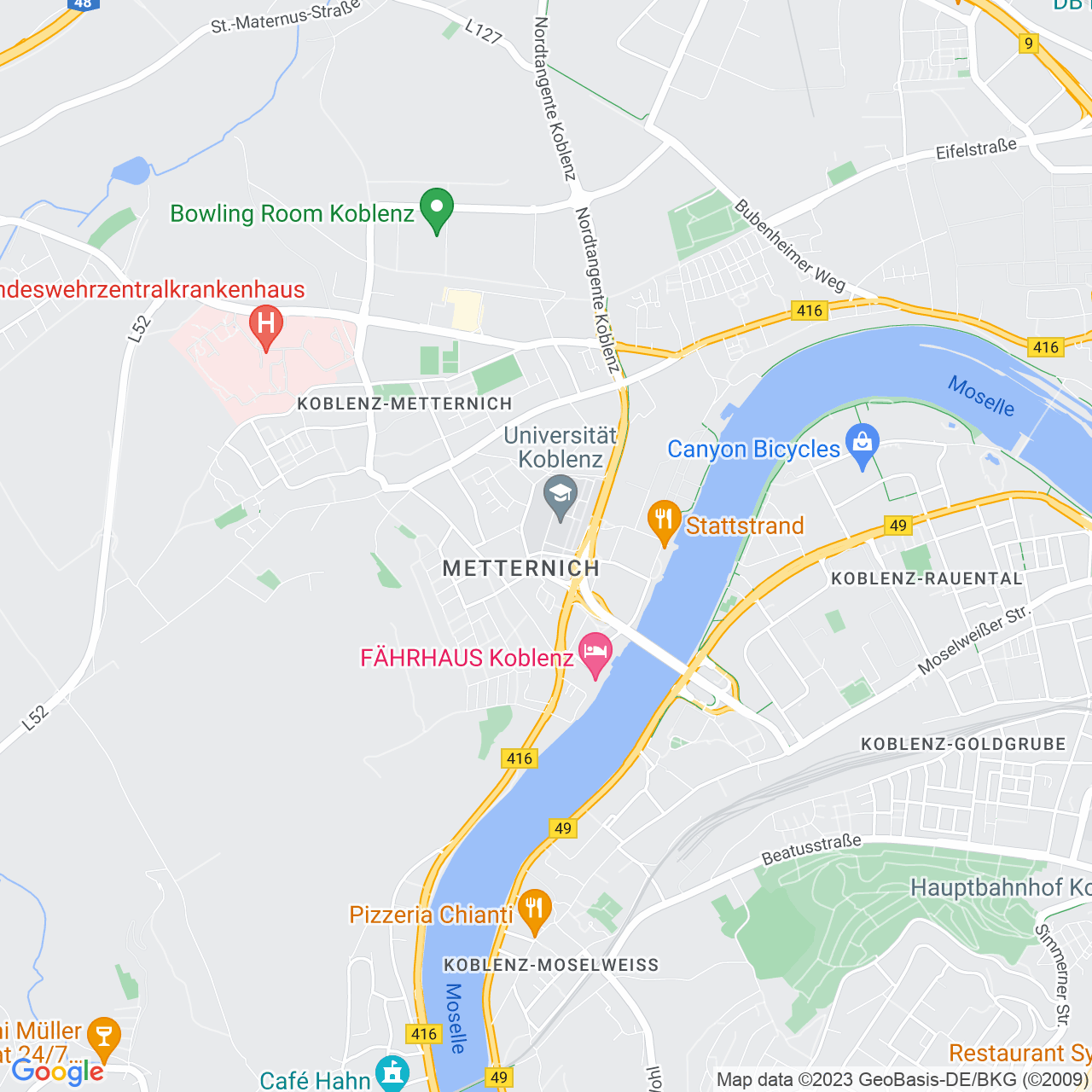
The University of Koblenz is one of the youngest universities in Germany. Research, teaching and everyday life at the university campus in Koblenz-Metternich are characterised by short distances and active interdisciplinarity.
The university's claim is "continue discovering". This reflects the incentive and aspiration of all members of the university to constantly scrutinise the familiar in order to gain new insights. To this end, the university offers its members the necessary freedom to further develop their academics and teaching and to break new ground in the transfer of ideas, knowledge and technology.
Kontakt
Studienbüro
Martina Hermanns
Emil-Schüller-Str. 12, EG, R. 034
Tel.: +49 261 287-1607
studienbuero@uni-koblenz.de
Studienberatung
Petra Meinerz
Emil-Schüller-Str. 12, EG, R. 032
Tel.: +49 261 287-1751
pmeinerz@uni-koblenz.de
Subject-specific Study Advisory Service
Prof. Dr. Marie-T. Hopp
Tel.: +49 (0)261 287 - 2259
lifesci@uni-koblenz.de









































 ) anklickst; Du findest es bei jedem Studiengang. Deine Auswahl siehst Du, wenn Du am oberen Seitenrand auf „Favoriten“ klickst.
 ) klickst. Dann bekommst Du per Mail einen Link, über den Du Deine Favoriten wieder abrufen und weiter bearbeiten kannst. Sobald Du Deine Favoriten einmal gespeichert hast, werden alle Änderungen, die Du vornimmst, automatisch übernommen. Deine Favoriten bleiben weiterhin über den Link in der Mail abrufbar.