

Liberal Arts and Sciences in Freiburg
The four-year Bachelor’s degree in Liberal Arts and Sciences (LAS) is an English-taught interdisciplinary undergraduate program and an alternative to disciplinary study programs.
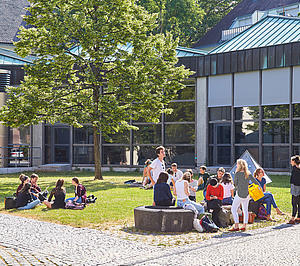
We understand LAS education as a process of intellectual discovery and personal development in an interdisciplinary and international learning community. LAS reaches across academic fields and includes discipline-oriented academic training in a dedicated Major. LAS at UCF enables students to learn broadly about the human and the non-human world, to systematically develop their capacity for high-level academic work, and to gradually unfold their own interests and abilities in ways suited to their aspirations.
Interdisciplinarity:
At UCF, the key to an interdisciplinary, choice-driven education is understanding what (scientific) knowledge is, how it is produced, and how knowledge and society interact. This is reflected in the LAS curriculum and in two professorships established specifically for the program: Epistemology and Theory of Science (Prof. F. Vogelmann) and Science and Technology Studies (Prof. V. Lipphardt).
Internationality:
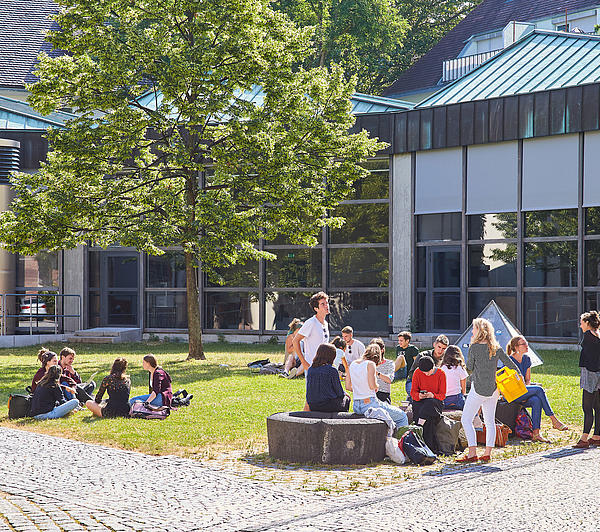
Internationality is an important aspect of the Liberal Arts and Sciences program. This shows in the curriculum, in the UCF staff, and in the student body. More than 25% of LAS students are international; incoming exchange students further enrich internationality at UCF. LAS students are encouraged to spend part of their studies abroad, and about 80% of all LAS students do so.
Quick Facts
Application period: June 1 – July 15
Degree: Bachelor of Arts or Bachelor of Sciences (depending on choice of Major)
Begin of Course: October
Duration: 8 Semesters
Total number of Credits: 240
Specifics: interdisciplinary, English-taught undergraduate program
Tuition: Registration fee of appr. 190 Eur per semester for all students. State of Baden-Württemberg tuition fees for non-EU students (1,500 Eur per semester) and for students seeking a second Bachelor degree (650 Eur per semester). For more information, please see the University Student Portal >
Departments: interdisciplinary initiative
Kritisches Denken
Epistemologie, Wissenschaftstheorie und Science and Technology Studies thematisieren ausdrücklich, wie Wissen erzeugt, begründet und gesellschaftlich eingeordnet wird. Forschungs-, Analyse- und Reflexionsaufgaben machen kritische Urteilsbildung zu einer Kernkompetenz.
Problemlösungskompetenz
Reale, komplexe Probleme sind ausdrücklich Ausgangspunkt des Lehrens und Lernens. Die Verbindung aus problemorientierter Lehre, interdisziplinärer Analyse und eigenständigen Projekten fördert strukturierte Lösungsentwicklung umfassend.
Lernkompetenz
Independent Enquiry, umfangreiche Wahlmöglichkeiten und selbstständige Projekte verlangen die eigenverantwortliche Formulierung von Fragen und Organisation von Lernzielen. Die Kompetenz ist dadurch über die gesamte vierjährige Studienstruktur hinweg verankert.
Informationskompetenz
Der Core trainiert Forschung, Analyse und wissenschaftliches Schreiben intensiv. Epistemologie und Wissenschaftstheorie vermitteln darüber hinaus, Informationen und Wissensansprüche hinsichtlich ihrer Entstehung, Qualität und Geltung kritisch zu prüfen.
Kommunikationskompetenz
Der Core trainiert Präsentation und wissenschaftliches Schreiben intensiv; hinzu kommen englischsprachige Lehre und Diskussionen in kleinen, internationalen Gruppen. Kommunikation wird damit kontinuierlich in unterschiedlichen fachlichen und kulturellen Kontexten eingeübt.
Systemkompetenz
Der Studiengang stellt komplexe reale Probleme und ihre wissenschaftlichen, gesellschaftlichen und ökologischen Wechselwirkungen in den Mittelpunkt. Interdisziplinarität und Science and Technology Studies fördern ausdrücklich die Analyse über einzelne Fachgrenzen hinaus.
Dialogkompetenz
Diskussionen in kleinen, internationalen und interdisziplinären Gruppen verlangen Perspektivübernahme und konstruktive Verständigung. Gruppenprojekte und die gemeinsame Verantwortung für Lehr- und Lernerfolg verstärken diese kontinuierliche Förderung.
Verantwortungsübernahme
Responsibility and Leadership ist ausdrücklich Bestandteil des verpflichtenden Core. Zusätzlich ist Shared Responsibility ein ausgewiesenes Prinzip des Studiengangs, durch das Studierende Verantwortung für gemeinsame Lernprozesse übernehmen.
Kooperationskompetenz
Projektbasiertes Lernen, häufige Gruppen- und Teamarbeit sowie die ausdrücklich geteilte Verantwortung für den Lernerfolg verankern Kooperation in den Lehrformen. Unterschiedliche disziplinäre Perspektiven müssen dabei in gemeinsame Ergebnisse überführt werden.
Selbstkompetenz
Das wahlorientierte Curriculum, die schrittweise Profilbildung und Independent Enquiry verlangen Selbstorganisation, Motivation und Reflexion der eigenen Interessen. Persönliche Entwicklung ist zudem ein ausdrücklich genanntes Bildungsziel des Programms.
Ambiguitätskompetenz
Die systematische Auseinandersetzung mit unterschiedlichen Wissensformen, disziplinären Perspektiven und komplexen gesellschaftlichen Problemen konfrontiert Studierende regelmäßig mit Mehrdeutigkeit. Das internationale und interdisziplinäre Lernumfeld unterstützt deren reflektierte Bearbeitung.
Nachhaltigkeitskompetenz
Umweltfragen sind bereits im ersten Studienjahr Gegenstand der problemorientierten Lehre; mit Environmental and Sustainability Sciences existiert zudem ein vollständiger einschlägiger Major. Die besonders intensive Förderung hängt allerdings von der Major-Wahl ab.
Ethische Kompetenz
Der Core behandelt Responsibility and Leadership sowie das Verhältnis von Wissen, Wissenschaft und Gesellschaft. Gesellschaftliche Herausforderungen wie globale Ungleichheit, öffentliche Gesundheit und Umweltprobleme bieten konkrete Anlässe für normative Abwägungen.
Diversitätskompetenz
Die englischsprachige, internationale Studierendenschaft und häufige Arbeit in kleinen Gruppen schaffen intensive Begegnungen mit unterschiedlichen Perspektiven. Interdisziplinarität sowie kultur- und gesellschaftswissenschaftliche Studienanteile unterstützen deren reflektierte Einordnung.
Beteiligungskompetenz
Projektbasiertes Lernen und die gemeinsame Verantwortung von Lehrenden und Studierenden schaffen regelmäßige Beteiligungs- und Gestaltungsmöglichkeiten. Im Governance-Bereich werden darüber hinaus politische und institutionelle Entscheidungsprozesse behandelt.
FutureCheck durchgeführt von:
- KI (GPT-5.6 Sol), am 09.10.2026 um 17:00 Uhr
- studieren.de, am 17.11.2026 um 12:00 Uhr
- Uni Freiburg, ausstehend…
Die hier dargestellten Zukunftskompetenzen basieren auf dem Future-Skills-Framework 2030 des Stifterverbandes. Mehr Infos >

Contact
University College Freiburg (UCF)
Bertoldstrasse 17
79085 Freiburg
Tel. +49 761 203-67342
studyinfo@ucf.uni-freiburg.de
uni-freiburg.de/ucf/ >
The LAS curriculum
The Liberal Arts and Sciences curriculum combines academic breadth and depth and provides students with choice and development opportunities within a structured framework and interdisciplinary learning community.
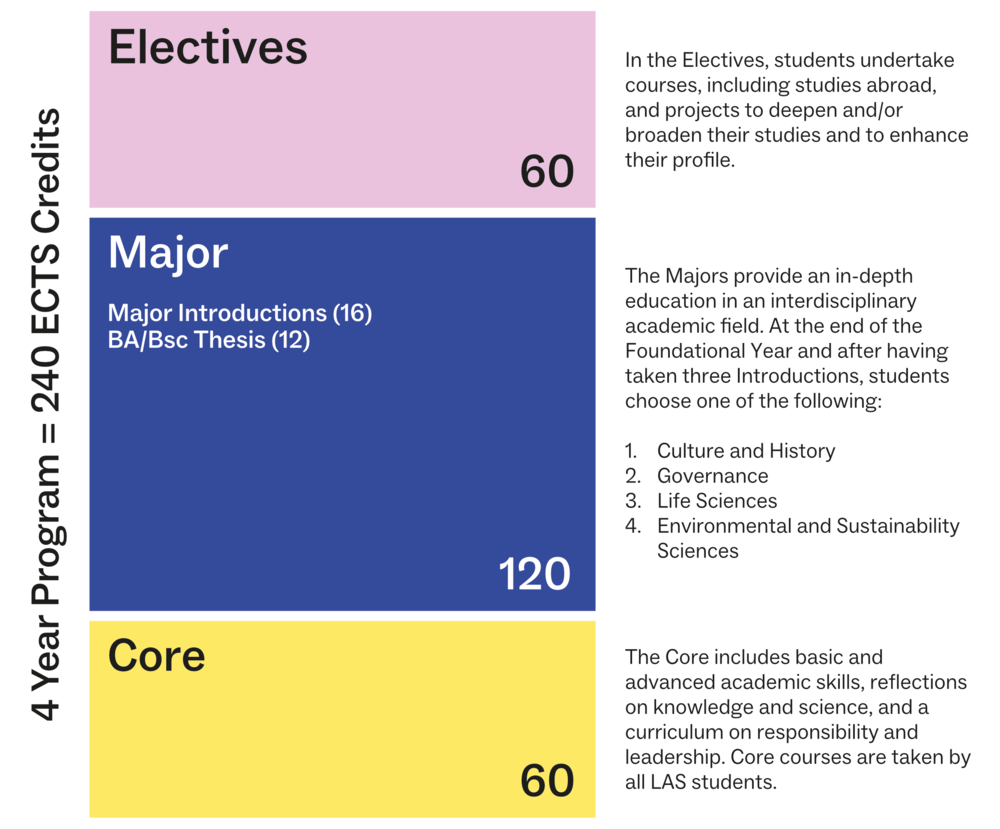
The Core (60 ECTS credits) is a distinctive feature of the Freiburg LAS program: It fosters students' academic and personal development by offering a range of courses on reflections of science and knowledge as well as on responsibility and leadership. Furthermore, students are intensively trained in general academic key skills (for research, analysis, presentation, and writing). In order to put these skills into context and to exemplify the necessity and complexity of interdisciplinary thought and action, the first year of the program focusses on contemporary societal challenges (such as Global Inequality, Public Health, Environmental Issues).
The Major (104 + 16 ECTS credits) constitutes the students’ training in a specific academic field. It aims to provide sufficient depth to make admission into disciplinary M.A. or M.Sc. programs possible. After their first year of studies, students choose one of the following Majors:
In their Electives (60 ECTS credits), students can take courses outside of their Major, visit courses at other departments of the University of Freiburg and EUCOR, attend language classes, undertake independent projects, and/or use these credits for courses taken during a semester or year abroad.
This arrangement combines interdisciplinarity with scientific rigor, creating space for individual exploration while maintaining a firm academic base. The LAS Course Catalog, the Module Handbook, and the official Rules and Regulations are available here.
The LAS program stands for
- Problem-oriented learning: Real-world problems and their complexity are the starting point of teaching and learning in the LAS program.
- Project-based learning: Students often work together in groups or teams and thereby combine knowledge acquisition with social and organizational skills.
- Independent enquiry: LAS students learn how to develop questions of their own and how to reach learning goals efficiently.
- Research-oriented learning: Especially the Majors are taught with a view to current research problems and horizons.
- Shared responsibility: In their different roles, lecturers and students are jointly responsible for teaching and learning success.
- Small group learning: Throughout the LAS program, most courses are restricted to a maximum of 20 participants.
- Internationality of staff and students including study abroad opportunities and a dual degree option in Liberal Arts and Sciences with University College Maastricht
Our target group is students with intellectual curiosity and responsibility, who are looking for breadth and depth in their academic training. The LAS program is selective. The grade- and interview-based selection emphasizes academic achievements and personal motivation.
Join us at our Open Days: We warmly invite you to our live and online Open Days, where you can get to know UCF staff and LAS students better and ask all your questions.
Contact
University College Freiburg (UCF)
Bertoldstrasse 17
79085 Freiburg
Tel. +49 761 203-67342
studyinfo@ucf.uni-freiburg.de
uni-freiburg.de/ucf/ >
University College Freiburg (UCF)
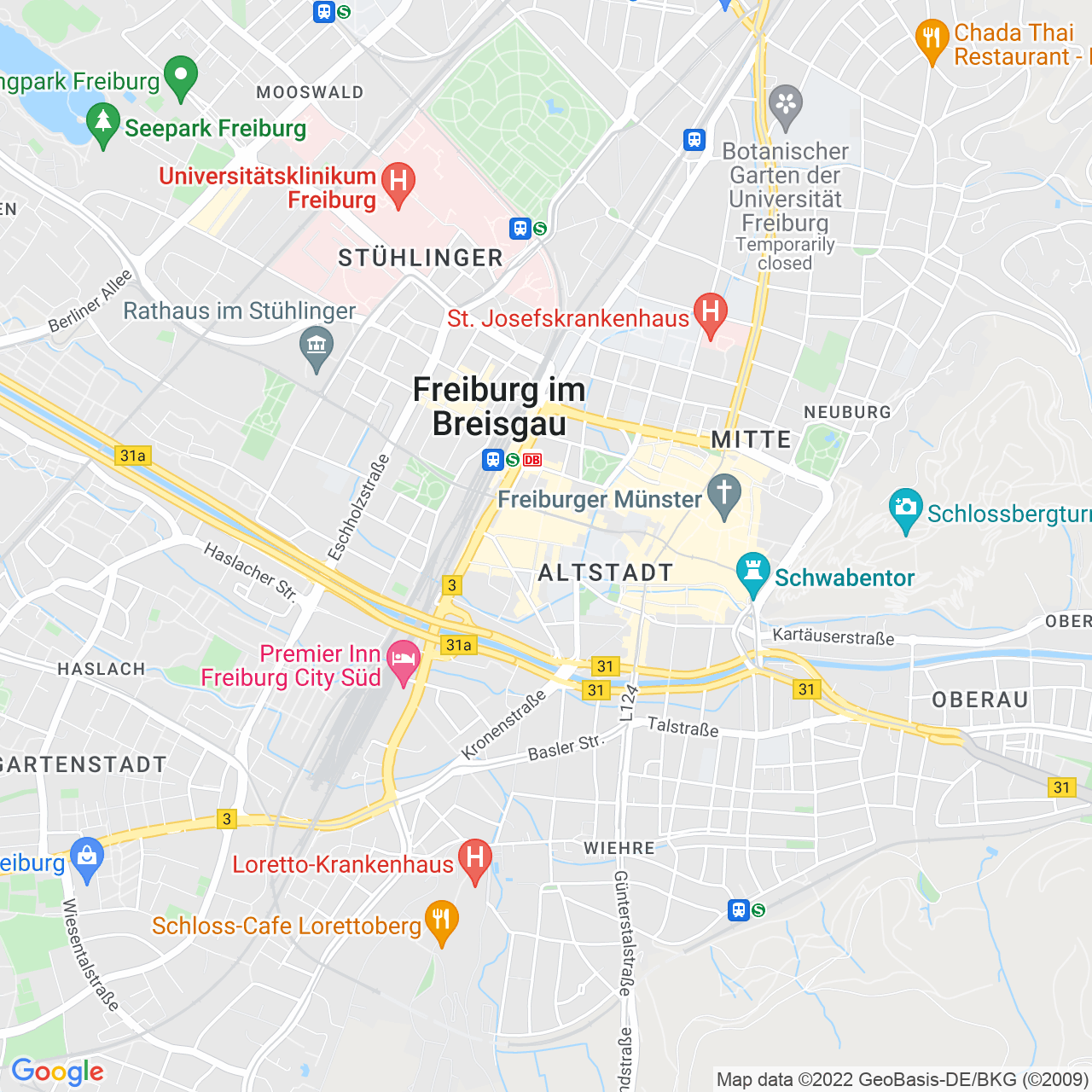
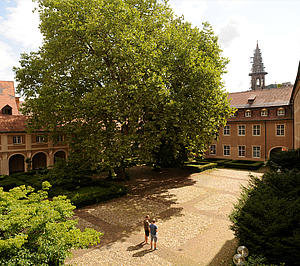
University College Freiburg (UCF) was founded in 2012 at the University of Freiburg and is situated in the historical buildings of the Alte Universität. Here, the Artes Liberales were taught centuries ago as a cornerstone of university education. Today, the Alte Universität is home to exciting new explorations in higher education. UCF promotes and administers international, interdisciplinary teaching activities and houses high profile projects, like the Bachelor program in Liberal Arts and Sciences.
Contact
University College Freiburg (UCF)
Bertoldstrasse 17
79085 Freiburg
Tel. +49 761 203-67342
studyinfo@ucf.uni-freiburg.de
uni-freiburg.de/ucf/ >








 ) anklickst; Du findest es bei jedem Studiengang. Deine Auswahl siehst Du, wenn Du am oberen Seitenrand auf „Favoriten“ klickst.
 ) klickst. Dann bekommst Du per Mail einen Link, über den Du Deine Favoriten wieder abrufen und weiter bearbeiten kannst. Sobald Du Deine Favoriten einmal gespeichert hast, werden alle Änderungen, die Du vornimmst, automatisch übernommen. Deine Favoriten bleiben weiterhin über den Link in der Mail abrufbar.