


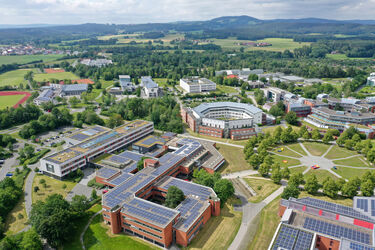
Welcome to the study programme of Geography of Environmental Transformation!
The English-taught master’s programme centres on the transformations and challenges that coin modern environmental research, focussing on climate change, geomorphological processes, hydrological systems, soil dynamics and changes in biodiversity. Physical geography is the core discipline addressing environmental challenges with a marked emphasis on environment-society interaction. Hosted at the University of Bayreuth which ranks among the strongest research centres in this field, the programme provides a learning environment where cutting-edge research and advanced methodological approaches directly shape the curriculum.
Address current environmental challenges from an interdisciplinary perspective:
The new M.Sc. programme "Geography of Environmental Transformation", formerly "Environmental Geography" at the University of Bayreuth, Germany, addresses students who want to
- obtain knowledge about the dynamics of environmental processes,
- acquire the analytical skills to assess human impacts on landforms and natural cycles,
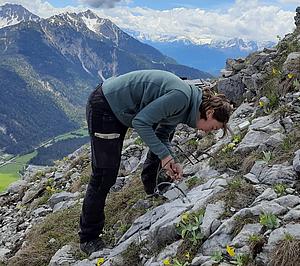
- go into the field and make first-hand experiences with research
- and to benefit from a place of study that is strong in research, welcoming, and international.
The essentials at a glance
Faculty: Faculty of Biology, Chemistry & Earth Sciences
Final degree: Master of science (M.Sc.)
Start of studies: Winter semester
Standard period of study: 4 semesters
Language of instruction: English
Admission requirements: Language proficiency: English level B2, German level A1

Contact
Head of Research Group of Climatology
Univ.-Prof. Dr. Cyrus Samimi
Tel.: +49 (0)921 / 55-2237
E-Mail: cyrus.samimi@uni-bayreuth.de
Content
You are interested in studying Geography of Environmental Transformation in the Master's Programme at the University of Bayreuth? Get a first overview and more detailed information here.
The English-taught M.Sc. programme at the University of Bayreuth provides expertise and practical experience in the field of environmental systems science from an explicitly interdisciplinary perspective. The combination of core areas in the natural sciences (climate change, geomorphological processes, hydrological systems, soil dynamics and changes in biodiversity) and contextualization from the social sciences (e.g. ecosystem services and geographical conflict research) ensure that our students receive training that is unique in Central and Eastern Europe.
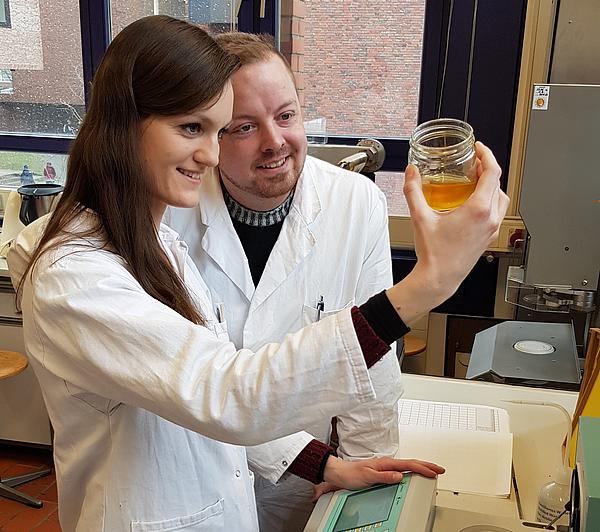
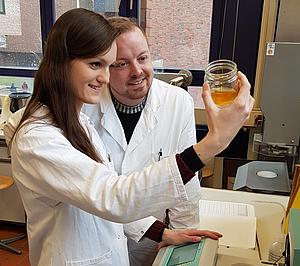
Research-led teaching, state-of-the-art quantitative methods, and training facilities such as a dating laboratory or the University’s Botanical Garden allow for an application- and target-oriented programme of study. Students receive training in the analysis and evaluation of complex environmental systems, in critical reflection upon the research process, in abstraction of research results, as well as in oral and written communication of findings.
The thematic structure of the M.Sc. programme consists of
- Fundamentals of Geography and environmental transformation (A).
- Modules "Earth, Soil, Surface" (B) with a strong focus on geomorphological and soil processes in relation to current environmental challenges.
- Modules "Climate, Water & Vegetation" (C) covering topics in the range of climatology, hydrology and biodiversity.
- And modules in "Environment & Society" (S) where environmental change and its relation to socio-cultural impacts is assessed.
In addition
- you are free to choose methods (M) and a range of elective courses (D/F), also from other Master Programmes according to your personal interests and specializations.
- you can strengthen your professional skills by completing an internship outside the university, or deepen your interest in research by attending a conference or participating in a science school.
- the 4th semester is intended to be used for writing the master thesis and its disputation.
Contact
Head of Research Group of Climatology
Univ.-Prof. Dr. Cyrus Samimi
Tel.: +49 (0)921 / 55-2237
E-Mail: cyrus.samimi@uni-bayreuth.de
Career prospects
The ongoing trend of global environmental change, depletion of resources, and the social perception of these developments are leading to an increased political and economic focus on topics relating to the environment and sustainability. This situation is driving up demand for experts with research- and practice-oriented training in the environmental sciences. Our graduates are thus prepared for a broad range of career opportunities in the private and public sectors. Possible fields of activity include:
- regional and urban planning
- nature conservation
- environmental planning and consulting
- laboratory-based environmental analysis
- science and research
- geoinformation services
- development cooperation
Contact
Head of Research Group of Climatology
Univ.-Prof. Dr. Cyrus Samimi
Tel.: +49 (0)921 / 55-2237
E-Mail: cyrus.samimi@uni-bayreuth.de
Notes on application and enrolment
Application period
for German and EU citizens:
1 March to 15 June for winter semester
for non EU citizens:
1 March to 15 June for winter semester
Application guide
Individual information on the application process (documents, deadlines, link to the application portal)
click here for German version
Admission requirements
Qualification
A bachelor's degree with an examination grade of “good” (2.5) or better in Geography or Geo-Ecology at the University of Bayreuth, or an equivalent degree
Equivalency
Equivalency of the completed bachelor's degree is the responsibility of the board of examiners and is not determined conclusively until the application process is under way; for this reason, no information can be provided in advance
Aptitude Assessment Process
One prerequisite for admission to the programme is the passing of an aptitude assessment process (see Examination Regulations, Annex 2); it includes an evaluation of the applicant's qualifications and, if necessary, a personal interview
Language proficiency
ENGLISH: level B2
GERMAN: level A1
Applying without a degree certificate
Applications may already be submitted before completion of the bachelor's degree; however, a total of at least 135 credits and a minimum grade of "good" (2.5) are required by the time of application
Special conditions
Conditional admission is not offered for this programme
Contact
Head of Research Group of Climatology
Univ.-Prof. Dr. Cyrus Samimi
Tel.: +49 (0)921 / 55-2237
E-Mail: cyrus.samimi@uni-bayreuth.de





















 ) anklickst; Du findest es bei jedem Studiengang. Deine Auswahl siehst Du, wenn Du am oberen Seitenrand auf „Favoriten“ klickst.
 ) klickst. Dann bekommst Du per Mail einen Link, über den Du Deine Favoriten wieder abrufen und weiter bearbeiten kannst. Sobald Du Deine Favoriten einmal gespeichert hast, werden alle Änderungen, die Du vornimmst, automatisch übernommen. Deine Favoriten bleiben weiterhin über den Link in der Mail abrufbar.