


Abschluss
Bachelor of Science
Start
Wintersemester
Abschluss
Master of Science
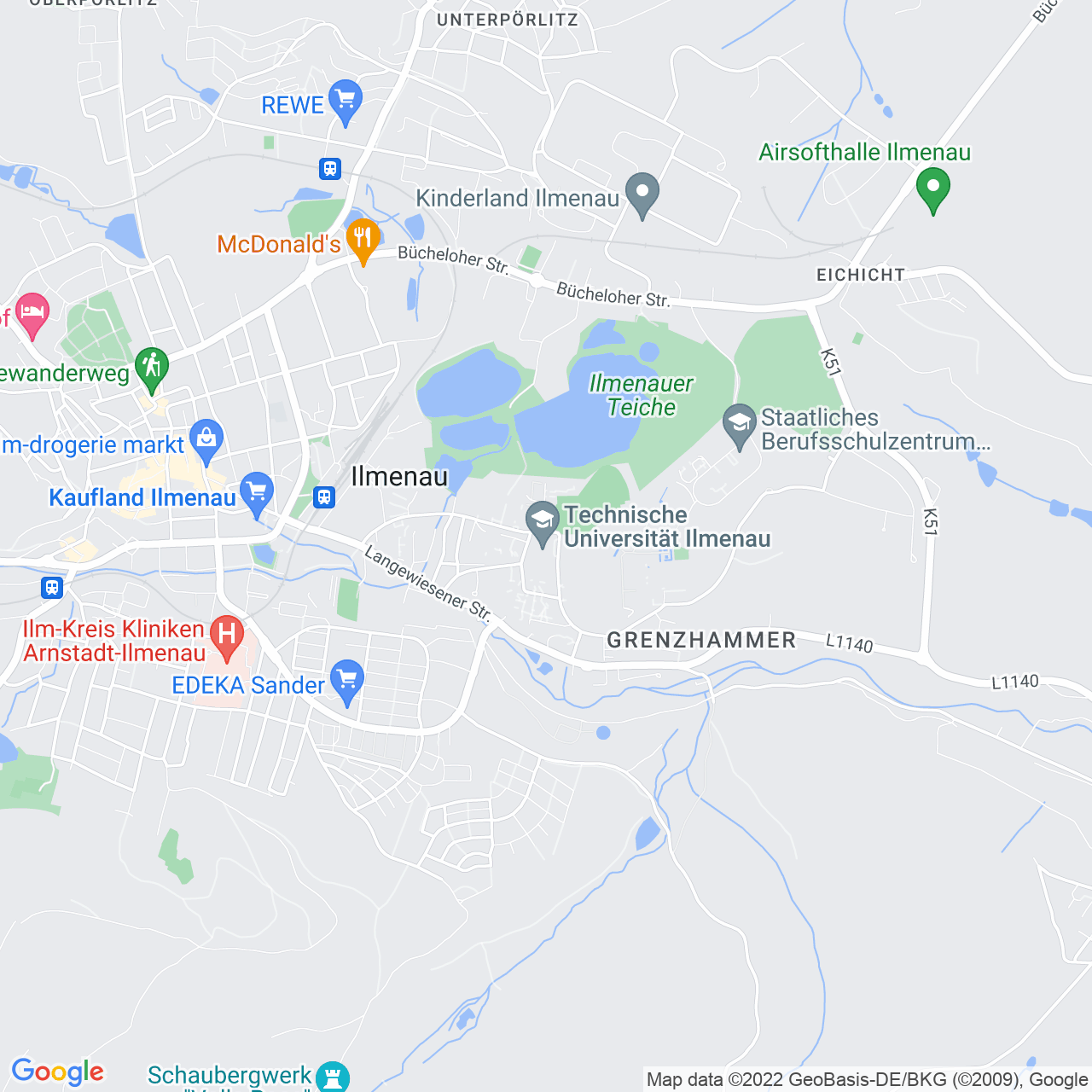
Technische Universität Ilmenau
Bachelor of Science (ID 15967)
1. Semester
- Algorithmen und Programmierung für IN und II (6 CP)
- Fremdsprache (2 CP)
- Grundlagen und Diskrete Strukturen (6 CP)
- Mathematik für Informatiker 1 (7 CP)
- Rechnerorganisation (5 CP)
2. Semester
- Algorithmen und Datenstrukturen (8 CP)
- Mathematik für Informatiker 2 (8 CP)
- NF Automatisierung (18 CP, W)
- Grundlagen der Elektrotechnik (4 CP, W)
- NF Elektrotechnik (18 CP, W)
- NF Medientechnologie (18 CP, W)
- Grundlagen der Medientechnik - Klausur (3 CP, W)
- Programmierparadigmen und Kommunikationsmodelle (7 CP)
- Rechnerarchitekturen für IN (8 CP)
- Rechnerorganisation (5 CP)
- Telematik 1 (5 CP)
3. Semester
- Automaten, Sprachen und Komplexität (8 CP)
- Computergrafik (5 CP)
- Datenbank- und Betriebssysteme (8 CP)
- NF Automatisierung (18 CP, W)
- NF Elektrotechnik (18 CP, W)
- Einführung in die Elektronik (3 CP, W)
- Praktikum Elektrotechnik und Elektronik (1 CP, W)
- NF Informations- und Kommunikationstechnik (18 CP, W)
- Elektrotechnik 1 (8 CP, W)
- Signale und Systeme 1 (5 CP, W)
- NF Mathematik (18 CP, W)
- Optimierung (5 CP, W)
- NF Medientechnologie (18 CP, W)
- Nichttechnische Fächer für IN Bsc (5 CP)
- Rechnerarchitekturen für IN (8 CP)
- Softwaretechnik (6 CP)
- Stochastik für Informatiker (5 CP)
4. Semester
- Logik und Logikprogrammierung (5 CP)
- Neuroinformatik und Schaltsysteme (8 CP)
- NF Automatisierung (18 CP, W)
- Automatisierungstechnik (5 CP, W)
- Regelungs- und Systemtechnik 1 - Profil MTR und BMT (5 CP, W)
- NF Biomedizinische Technik (18 CP, W)
- Bildgebende Systeme in der Medizin 1 (3 CP, W)
- Strahlungsmesstechnik (2 CP, W)
- Technische Sicherheit und Qualitätssicherung in der Medizin (2 CP, W)
- NF Elektrotechnik (18 CP, W)
- Elektrische Energietechnik (5 CP, W)
- NF Informations- und Kommunikationstechnik (18 CP, W)
- Elektrotechnik 1 (8 CP, W)
- Hochfrequenztechnik 2: Subsysteme (5 CP, W)
- NF Maschinenbau (18 CP, W)
- Mechanismentechnik (5 CP, W)
- Technische Mechanik 1.1 (4 CP, W)
- NF Mathematik (18 CP, W)
- Numerik (5 CP, W)
- NF Medientechnologie (18 CP, W)
- NF Medizinische Informatik (18 CP, W)
- Einführung in die medizinische Informatik (2 CP, W)
- Neurobiologische Informationsverarbeitung (2 CP, W)
- NF Wirtschaftswissenschaften (18 CP, W)
- Anwendungsmodellierung und Geschäftsprozessmanagement (6 CP, W)
- Einführung in ERP-Systeme (4 CP, W)
- IT-Unterstützung für inner- und überbetriebliche Geschäftsprozesse (8 CP, W)
- Überbetriebliche Geschäftsprozesse und IT-Integration (4 CP, W)
- Rechnerarchitekturen für IN (8 CP)
- Softwareprojekt (8 CP)
- Softwaretechnik (6 CP)
- Wahlpflichtbereich für IN Bsc (25 CP)
- Automatentheorie (5 CP, W)
- Besonderheiten eingebetteter Systeme (5 CP, W)
- Datenbank-Implementierungstechniken (5 CP, W)
- Linux und SELinux - Konzepte, Architektur, Algorithmen (5 CP, W)
- Projektseminar Simulation von Internet-Protokollfunktionen (5 CP, W)
- Randomisierte Algorithmen (5 CP, W)
- Systemsicherheit (5 CP, W)
5. Semester
- Neuroinformatik und Schaltsysteme (8 CP)
- NF Automatisierung (18 CP, W)
- Modellbildung und Simulation (5 CP, W)
- Prozessmess- und Sensortechnik 1 (5 CP, W)
- Regelungs- und Systemtechnik 2 - Profil MTR und BMT (5 CP, W)
- NF Biomedizinische Technik (18 CP, W)
- Anatomie und Physiologie 1 (3 CP, W)
- Biomedizinische Technik in der Therapie (2 CP, W)
- Einführung in die Neurowissenschaften (3 CP, W)
- Grundlagen der Biomedizinischen Technik (3 CP, W)
- Labor BMT 1 (1 CP, W)
- NF Elektrotechnik (18 CP, W)
- Leistungselektronik 1 - Grundlagen (5 CP, W)
- Leistungselektronik und Steuerungen (3 CP, W)
- NF Fahrzeugtechnik (18 CP, W)
- Fahrdynamik 1 (4 CP, W)
- Fahrzeugantriebe 1 (3 CP, W)
- Praktikum Fahrzeugtechnik (1 CP, W)
- NF Informations- und Kommunikationstechnik (18 CP, W)
- Kommunikationsnetze (5 CP, W)
- NF Maschinenbau (18 CP, W)
- Digitale Produktmodellierung (4 CP, W)
- Grundlagen der Fertigungstechnik (3 CP, W)
- NF Mathematik (18 CP, W)
- Diskrete Mathematik (5 CP, W)
- NF Medientechnologie (18 CP, W)
- Audio- und Tonstudiotechnik (5 CP, W)
- Grundlagen der Elektroakustik (3 CP, W)
- Grundlagen der Videotechnik (3 CP, W)
- Usability Engineering 1 (3 CP, W)
- NF Medizinische Informatik (18 CP, W)
- Grundlagen der Biosignalverarbeitung (5 CP, W)
- Labor BMT1 (1 CP, W)
- NF Wirtschaftswissenschaften (18 CP, W)
- Anwendungsmodellierung und Geschäftsprozessmanagement (6 CP, W)
- Einführung in das Recht (4 CP, W)
- Einführung in die Wirtschaftsinformatik (5 CP, W)
- Grundlagen der BWL 1 (2 CP, W)
- Grundlagen des Informationsmanagements (5 CP, W)
- IT-Unterstützung für inner- und überbetriebliche Geschäftsprozesse (8 CP, W)
- Marketing1 (4 CP, W)
- Methoden und Werkzeuge der digitalen Fabrik (5 CP, W)
- Mikroökonomie (5 CP, W)
- Produktionswirtschaft 1 (4 CP, W)
- Systementwicklung & IT-Projektmanagement (6 CP, W)
- Zivilrecht (4 CP, W)
- Proseminar für IN Bsc (4 CP)
- Wahlpflichtbereich für IN Bsc (25 CP)
- Advanced Operating Systems (5 CP, W)
- Computervision (8 CP, W)
- Datenbanksysteme 2 (7 CP, W)
- Entwicklung integrierter HW/SW Systeme (5 CP, W)
- Kryptographie (5 CP, W)
- Mobilkommunikation (5 CP, W)
- Network Security (5 CP, W)
- Systementwurf (5 CP, W)
- Telematik 2 / Leistungsbewertung (6 CP, W)
- Verifikation (5 CP, W)
6. Semester
- Bachelorarbeit mit Kolloquium (15 CP)
- Abschlusskolloquium (3 CP)
- Bachelorarbeit (12 CP)
- NF Biomedizinische Technik (18 CP, W)
- Anatomie und Physiologie2 (3 CP, W)
- NF Fahrzeugtechnik (18 CP, W)
- Fahrdynamik 2 (3 CP, W)
- Fahrzeugantriebe 2 (4 CP, W)
- Grundlagen Hydraulik/Pneumatik (2 CP, W)
- Praktikum Fahrzeugantriebe (1 CP, W)
- NF Informations- und Kommunikationstechnik (18 CP, W)
- Elektronische Messtechnik (5 CP, W)
- Signal- und Mustererkennung (5 CP, W)
- NF Maschinenbau (18 CP, W)
- Grundlagen der Kunststoffverarbeitung (2 CP, W)
- NF Mathematik (18 CP, W)
- Informations- und Kodierungstheorie (5 CP, W)
- NF Medientechnologie (18 CP, W)
- Videoproduktionstechnik (5 CP, W)
- NF Medizinische Informatik (18 CP, W)
- Anatomie und Physiologie 2 (3 CP, W)
- Bildverarbeitung in der Medizin 1 (4 CP, W)
- NF Wirtschaftswissenschaften (18 CP, W)
- Systementwicklung & IT-Projektmanagement (6 CP, W)
- Wahlpflichtbereich für IN Bsc (25 CP)
- Computational Intelligence (8 CP, W)
- Computervision (8 CP, W)
- Content-Verwertungsmodelle und ihre Umsetzung in mobilen Systemen (5 CP, W)
- Datenbanksysteme 2 (7 CP, W)
- Mobilkommunikation (5 CP, W)
- Objektorientierte Modellierung (5 CP, W)
- Wissenschaftlich-Technische Visualisierung (5 CP, W)
Dein Studium? Deine Module!

Lade Dir hier Dein interaktives Modulhandbuch:






























































 ) anklickst; Du findest es bei jedem Studiengang. Deine Auswahl siehst Du, wenn Du am oberen Seitenrand auf „Favoriten“ klickst.
 ) klickst. Dann bekommst Du per Mail einen Link, über den Du Deine Favoriten wieder abrufen und weiter bearbeiten kannst. Sobald Du Deine Favoriten einmal gespeichert hast, werden alle Änderungen, die Du vornimmst, automatisch übernommen. Deine Favoriten bleiben weiterhin über den Link in der Mail abrufbar.